Why is Black Friday won in Q1, not Q4?
Top-quartile brands don't switch on upper-funnel spend for peak, they hold it above 20% all year round. Here's the client data behind why Q4 is won early.
All
Learn More

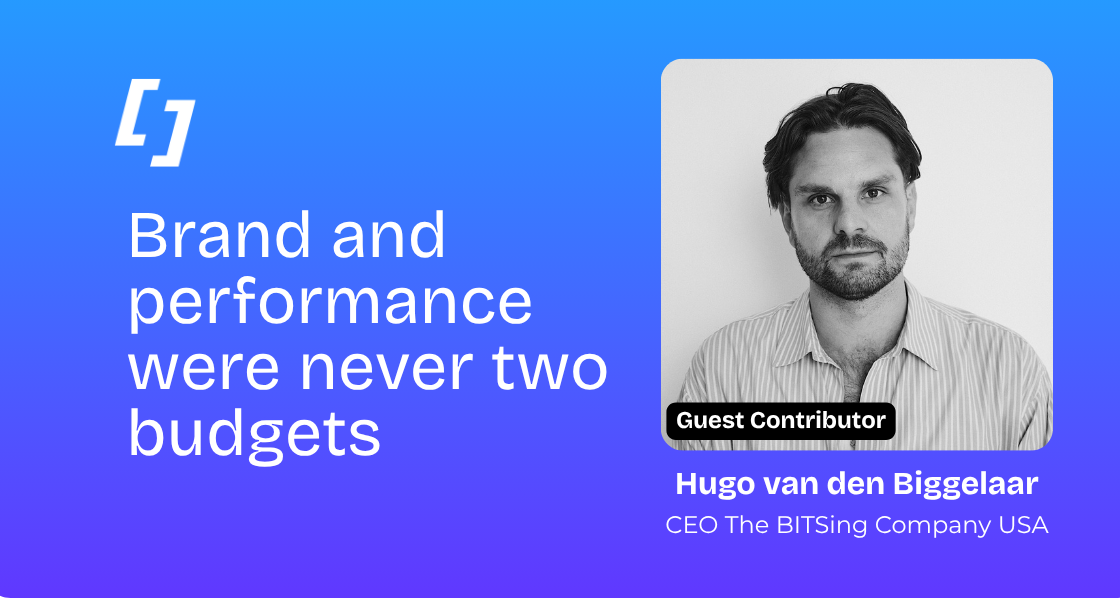
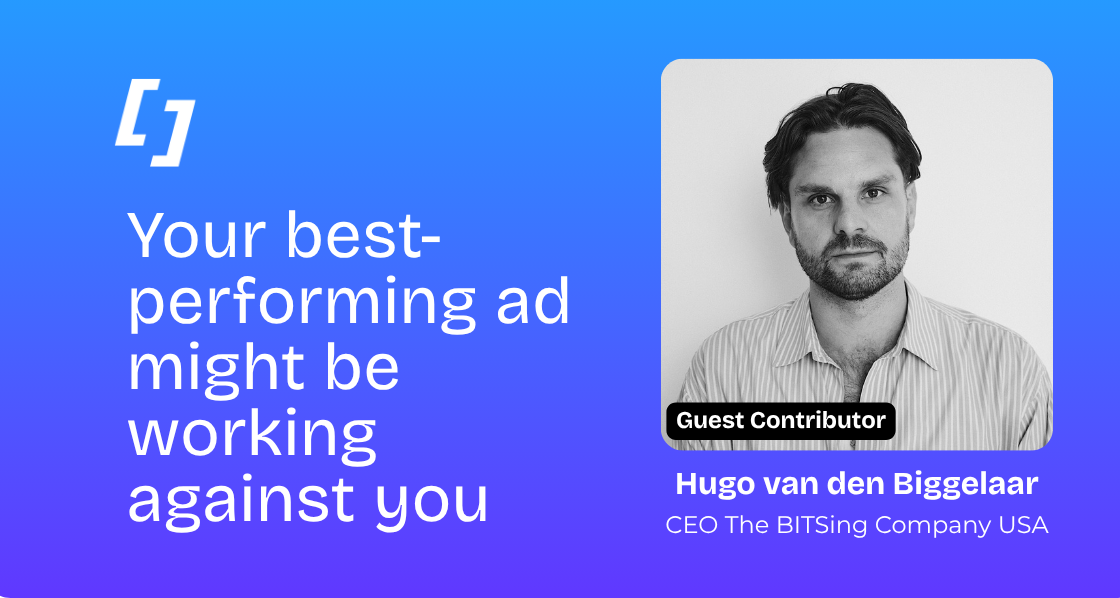
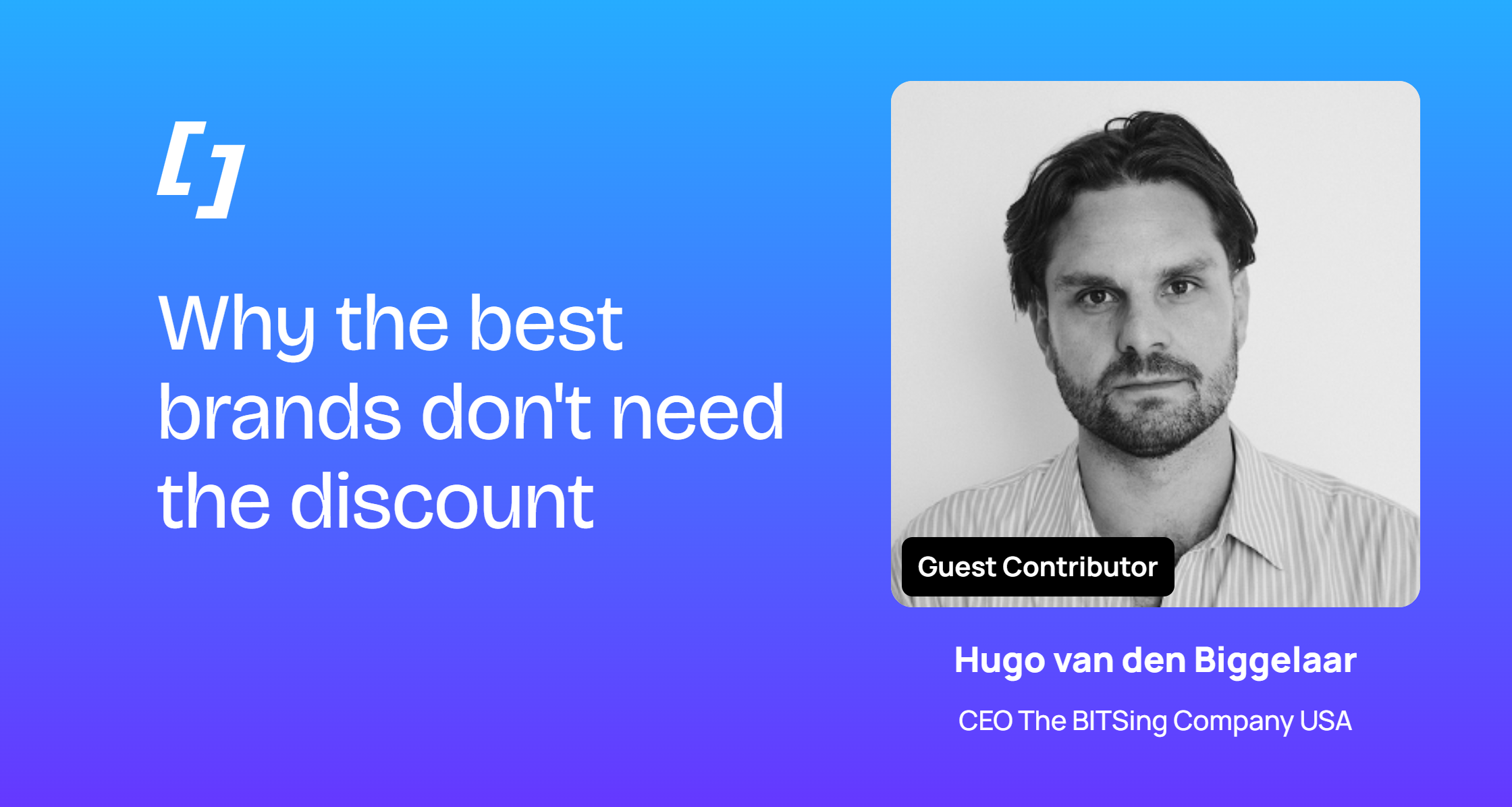
Hugo van den Biggelaar spent 8.5 years inside Nike’s finance and brand functions before founding BITSing. Here’s the one thing brand buys you that lands straight on your margin.
Open your inbox on a random weekday in November and you will start to see it. The discounts used to cluster around Black Friday and Cyber Monday, one long weekend and then back to normal, but that weekend has spread out until it swallows most of the month. More and more brands lean on the same word, sale, and they keep starting earlier.
Peak season has turned into a contest over who can cut the deepest, and the odd thing is that almost nobody in it chose to be there. One competitor goes early, so you go earlier. Another goes deeper, so you go deeper still. It feels less like a plan and more like something happening to you. But it doesn’t have to be that way. The race that feels so inevitable every November is a choice, not a law of nature.
And a few brands just don’t play along. Patagonia once ran an ad on Black Friday, the single biggest shopping day of the year, telling people not to buy its jacket, and it has built a business on products it rarely puts on sale. It sounds a little mad on paper, and yet Patagonia is not the one sweating about the quarter. It holds its prices, sits the frenzy out, and people seem to love it more for the confidence, not less.
What a brand like that has, and what brands racing to discount are handing away, is a thing called pricing power. It might be the most underrated idea in marketing. In plain terms it is the ability to charge a bit more than the next option and still have people buy, and it is one of the few brand effects that shows up directly in profit. Many companies give it away slowly, one discount at a time, and peak season is when much of it gets spent.
Marketers love the soft words for brand. Awareness, equity, love, consideration. Those are real, and they sit one step removed from what your business is paid in. Warren Buffett said the single most important thing in judging a business is pricing power. In his view, a company able to raise its prices without losing customers to the competition is a very good business.
That is brand in a language the CFO speaks. The gap between the price you can hold and the price a generic version of you would scrape together is largely margin, and it is the cleanest money brand will ever make you.
Picture two products that cost about the same to make. One goes out at forty dollars, the other at ninety, and the extra fifty is mostly profit. That fifty bucks is the brand, written down as a number. Finance should care because pricing power compounds. Once you can charge a little more, you charge it across your range, year after year, and it builds into an asset that keeps paying after the spend stops. I spent long enough on the finance side of a business to know the brand conversation only lands once you stop talking about awareness and start talking about the price you get away with charging.
So where does that extra fifty dollars come from? Not from the product being that much better, most of the time. Put a premium brand and a cheap one side by side in a blind test and the honest gap is often tiny, sometimes nothing at all. People pay up anyway, because they want the first one, and wanting is a feeling, not a calculation.
You do this yourself. There is a coffee you will cheerfully hand six dollars over for, and a near-identical one two doors down you would not pay three for, and if somebody made you defend that on the specs you could not, not with a straight face. That is an emotional preference lifting money out of your pocket, and every brand with real pricing power is sitting on the happy side of exactly that trade.
Someone deciding on pure logic buys the cheapest thing that does the job. The main reason anybody pays more is that they prefer you, that it feels like yours is the one for them, and that feeling is the whole product you are selling. The price is just the receipt for it.
Which is why pricing power is never about the product on its own. It is the meaning stacked on top of it, the things that make somebody prefer you before they have read a single spec. Nail that and the price sorts itself out, miss it and you are left arguing about the one thing no business ever wins on.
Price is where a brand with no pricing power ends up by default, and a discount is how you volunteer for it. Sales come in soft, the fastest lever within reach is the price, it usually does a little something, so it feels like the fix. But a discount can only shift a sale, it cannot build the wanting underneath it, and the wanting was the reason you could charge a premium in the first place. So you spend the asset to make the month, and the asset does not grow back on its own.
It is worse than the margin you lose on the day, too. A discount tells the market, out loud, what you think you are worth, and people write that number down and hold you to it. Keep it up and you train your own best customers to wait for the next cut, which lowers the ceiling on everything you can charge from then on. Pricing power rarely goes all at once. It leaks, a couple of points at a time, and you usually don’t notice it is gone until you try to put a price up and the whole market laughs at you.
Much of the category is doing this to itself as peak season winds up. Brands cut deeper and start earlier each year, hand back their pricing power at the same moment, and teach a generation of shoppers that only suckers pay full price. I have a lot of respect for the brands that just refuse. They hold the line because they have worked out that the discount everyone else is running is a loan against next year’s margin, and the bill always turns up.
Underneath this sits what builds pricing power, and it is a better route than a discount. You get to charge more when you are the brand people want in the first place, the one they will go out of their way for, the one with something on offer that few others have. That is about as much power as a business can hold, being chosen on purpose rather than settled for on price. The premium you charge is the reward for standing out, and the more you stand out, the more you can charge.
The opposite is the hole most brands fall into without meaning to. When you look and sound like everyone else, there is little left to pick you on but price, and once a market is fighting on price there is no pricing power left anywhere in it, just a slow drift to the bottom that nobody wins. So the premium lives in whatever makes you distinct, the feeling and meaning behind the product rather than the product itself, which is the one thing a competitor cannot copy off you. A brand that owns something like that charges close to whatever it likes, while a brand that blends in with three others charges whatever the cheapest of the four is charging, and not a cent more. And I must admit, most marketing, lined up side by side, blends in completely, the same promises in the same words that any rival could run tomorrow and nobody would blink.
Do the test on your own last campaign. Cover the logo and ask yourself whether a competitor could slap their name on it and run it untouched. And if the answer is yes, that campaign builds no pricing power, because it gave people no reason to prefer you that the next brand couldn’t claim word for word.
That is the real job, and it is not for the fainthearted: becoming the brand people can’t get anywhere else, the one with a point of view and a meaning and a reason to be chosen that a competitor cannot paste into their own deck. It is slower and harder than a discount by a mile. It is also the only thing on earth that earns you the right to charge more.
None of this rules out running an offer. A smart, deliberate promotion has its place, and choosing to discount is a different thing from getting pushed into it. The whole point is to stop giving your pricing power away on reflex, especially now, when the pull to match everybody else is strong.
Before you cut, ask yourself whether you have a price problem or a wanting problem, because if people don’t want you enough, a lower price hides that for a week and makes it worse underneath. Keep a full-price core you simply never discount, so there is always a version of you in the market that says what you are worth. And when you do need to nudge somebody, reach for real value before you reach for a price cut. A better guarantee, quicker shipping, a little gift in the box, early access, something useful thrown in, these move people the way a discount does while adding to what you are worth instead of chipping away at it. They still feel like they won, and you taught them nothing about a lower price.
And one more that points the other way. If you have built real preference, there is a good chance you are underpricing it right now. If customers would pay more than you charge today, that difference is margin you are not collecting. Pricing power is only worth building if you are willing to use it.
Then give the rest of the year to the slow stuff, the meaning and the distinctiveness that let you hold your price while the rest of the category folds like a cheap deckchair. It is the work this peak season won’t thank you for and the next one absolutely will.
Because when you strip it all back, pricing power is the whole difference between a brand and a commodity with a logo stuck on it. It is the number that proves people don’t just know you, they want you, enough to pay for the privilege. And it is worth guarding above almost anything on this quarter’s report, because it is the one thing that decides what every quarter after this one gets to look like.
Hugo van den Biggelaar spent 8.5 years at Nike across finance, insights and brand. He now runs BITSing in the US, a growth methodology built over thirty years and used in more than a thousand organizations. He also runs Think Biggie, a Brooklyn-based creative studio, and is a founding contributor to the Fospha Academy.
Your best-performing ad might be working against you