The Science Behind Budget Planner
How we turn 5,000 forecasts into one plan you can trust
.png)
Picture this: your summer sales went gangbusters, and finance just signed off on a 10% budget increase for next quarter. For a second, that feels like a win. Then the dread creeps in. You manage 50 channels across 7 locales, and building the pivot table to forecast the best way to spend that extra budget looks like a daunting task on its own.
This is a gift, and you know it. You also know the pressure that comes with it. You need that budget to deliver a real incremental return, and you need to prove you deserve even more the next time finance is deciding where to invest.
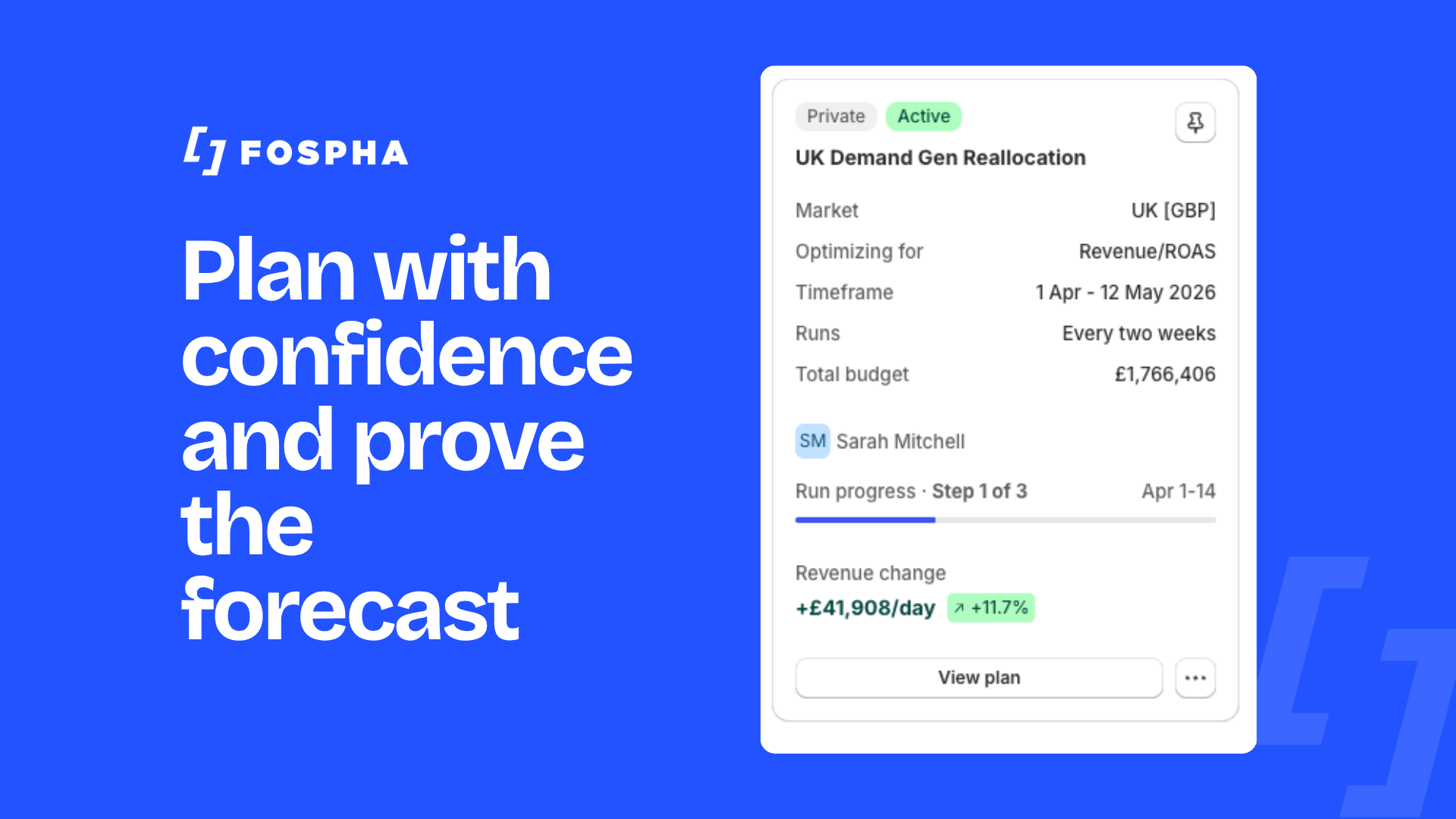
Budget Planner is Fospha's tool for exactly this problem. It turns a forecast into one recommended plan you can act on. It's now in Beta.
To get there, Budget Planner runs four models in sequence: a measurement layer that keeps the inputs accurate, a forecasting layer that maps a genuine range of outcomes, an optimization layer that turns each of those outcomes into a real plan, and a selection layer that picks the one built to hold up. Once a plan is live, we also track it against what really happens.
Here's what each part does.
Model 1: the foundation underneath it
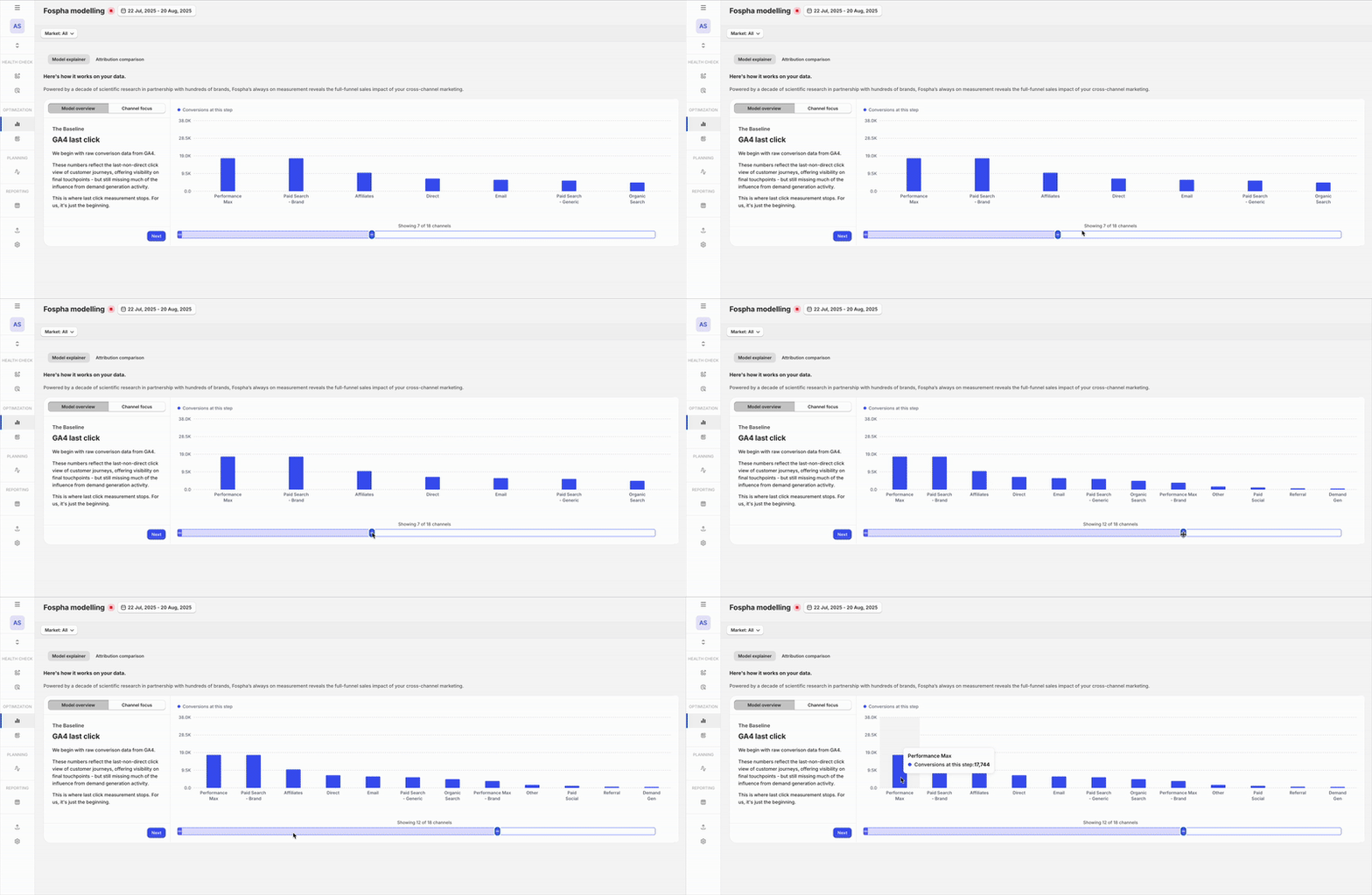
Before any forecasting happens, we build on top of our core measurement layer: attribution, post-purchase attribution, reconciliation, and impression measurement, working together. Everything above this layer depends on it.
We've covered how that layer works in more detail in our model spotlight on full-funnel measurement, but it's useful to know it's there, doing the less visible work the rest of the model relies on.
The problem with a single forecast
Most budgeting tools hand you one number and expect you to trust it. If a model says shifting $50,000 into paid search will return $180,000, that's a single plausible outcome. Market conditions shift. Competitors change their bids. A single-point forecast can't tell you how confident to be in it, so you're left either trusting it fully or discounting it. Neither is especially useful when real spend decisions are on the line.
Model 2: starting from a range of futures
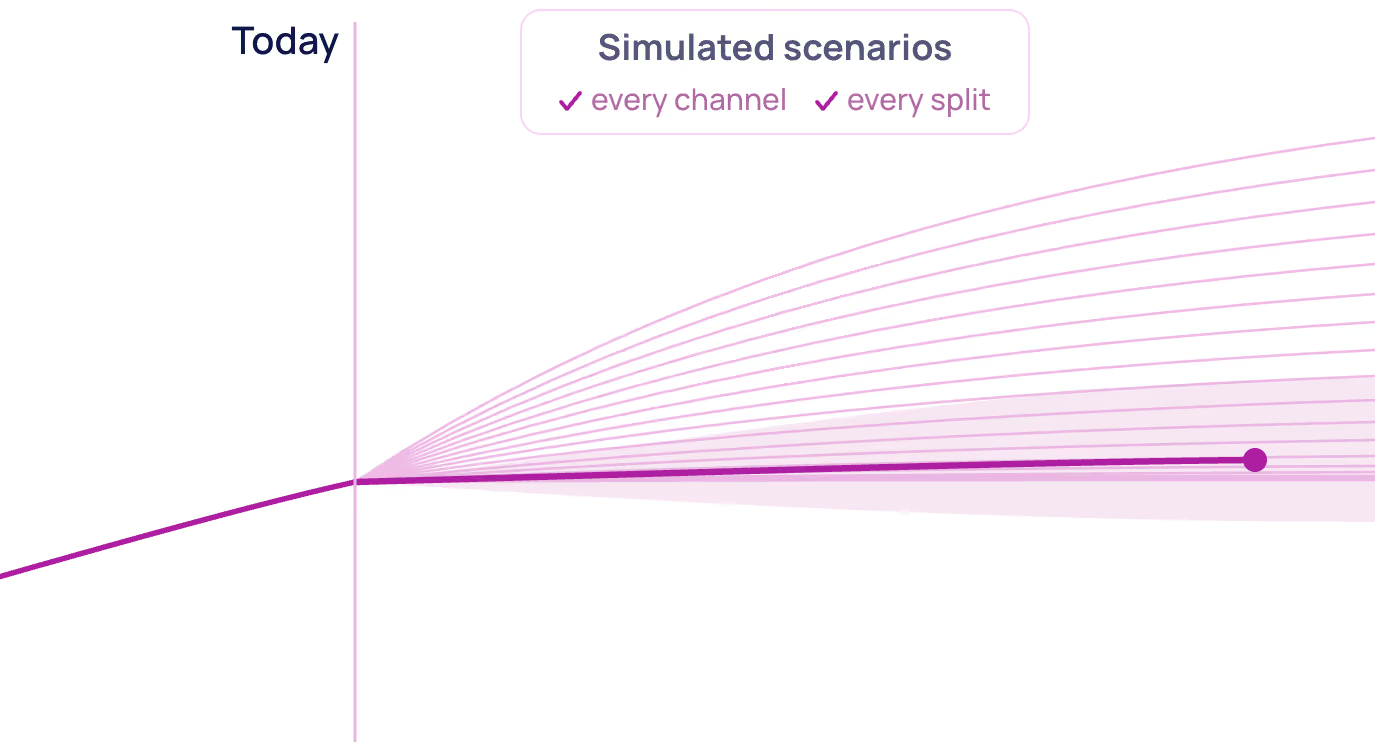
This is where our forecasting layer comes in. We don't ask "what will this channel return if I spend X" just once. We ask a version of that question 5,000 times, each one built on a slightly different, statistically plausible assumption about how your audience might respond at different spend levels.
A weather forecaster models a range of possible atmospheric setups and reports back the realistic spread of outcomes for tomorrow. Our forecasting layer works the same way. The result is thousands of spend-response curves stacked together, each a genuinely plausible version of reality. That spread is a more honest starting point because it reflects the uncertainty that's actually there.
Model 3: turning those forecasts into 500 real plans
From there, we narrow the field to 500 of those forecasts and run a complete budget optimization on each one, working out the best channel allocation for that particular version of reality. Each of these 500 optimizations is designed to return a plan that outperforms your current allocation, based on its own underlying forecast. What differs between them is how optimistic or conservative that forecast happened to be.
Model 4: keeping the plans built to hold up
Out of those 500 plans, we rank everything from most optimistic to most conservative and keep only the most cautious 10%, the 50 plans built on the least generous assumptions. We then average those 50 together into the single recommendation you get to see.
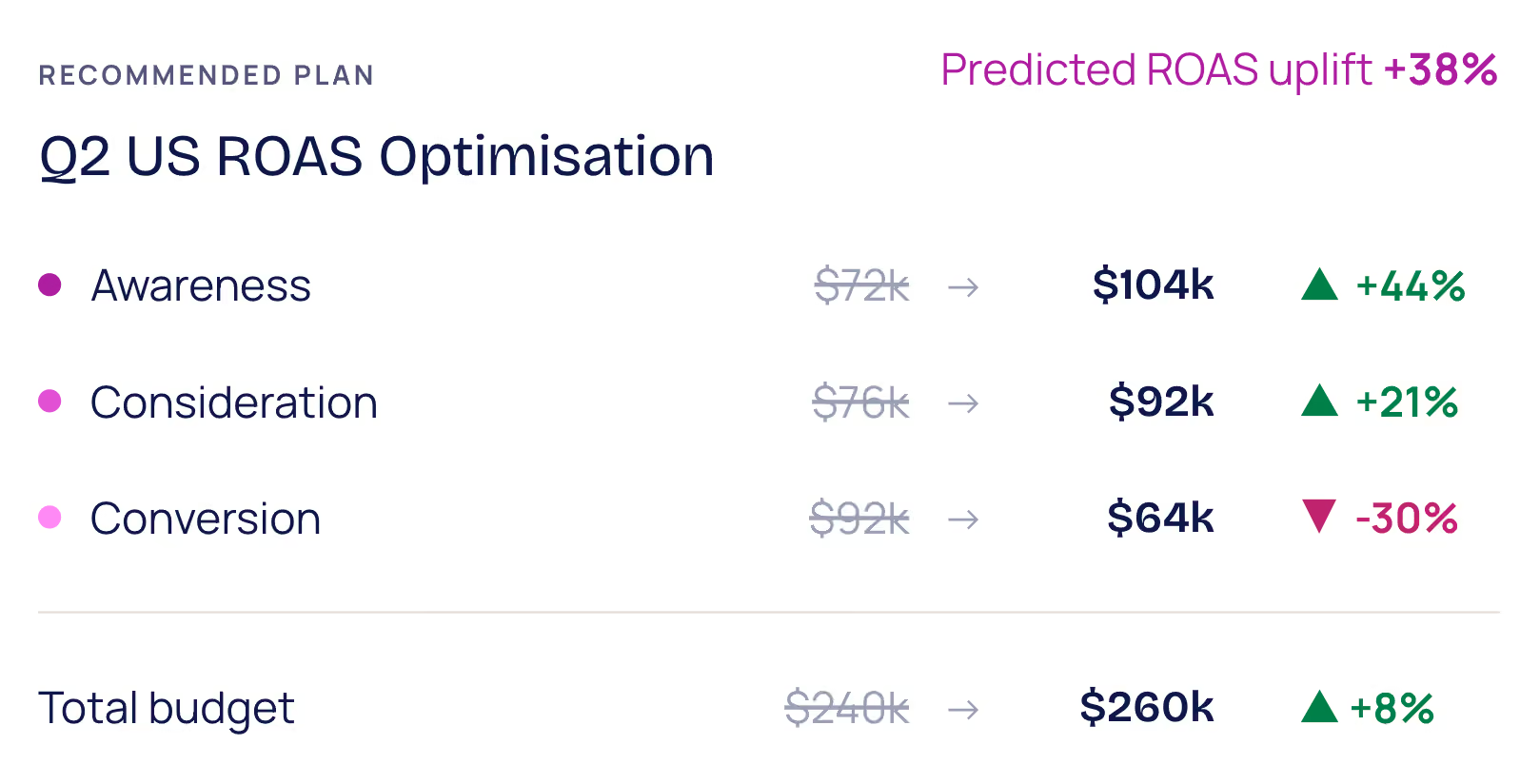
Insurance works on similar logic: pricing is typically built around a buffer against a worse plausible outcome. The result sits deliberately on the safer end of the range, so real results have a reasonable chance of matching or beating it.
Five thousand forecasts, narrowed to 500 real plans, distilled to the most dependable 50, averaged into one. That's the mechanism, start to finish.
After the recommendation: tracking it against reality
Those four models are what build the recommendation. Once a plan is live, we compare what it predicted against what happened. A forecast that's rarely checked against reality is harder to fully trust.
Tracking predicted versus actual is what turns a one-time recommendation into something that earns trust over a full quarter. You get to watch the plan play out and see for yourself.
Why this changes your day-to-day
Scenario planning is a great way to explore possibilities. Budget Planner builds on that foundation by adding a plan you can measure and commit to because the risk-weighting happens before it reaches you.
It also adapts to whatever you're doing that week. Run it across your full channel mix when you need the big picture. Narrow it to a single market for a focused deep dive without the tool breaking down. Use it to test what happens if you move 15% into a different channel, measured against a plan you've already committed to.
Bringing it back to your next budget meeting
Next time finance asks why your split looks the way it does, you've got a sturdier answer than instinct. The plan is built on 500 realistic versions of how the market could behave, sitting on top of a measurement foundation designed to get the inputs right, and we choose it because it's built to hold up even when things don't go your way. That budget increase stops feeling like a daunting task and starts feeling like an opportunity. You're still going to be the one standing in that room when the question comes. This time, the math is standing behind you, and it's the same math that proves you deserve the next increase too.
If you want to see what Budget Planner would recommend for your own channel mix, take a look at Budget Planner, or book a demo to walk through it with your own numbers

Stay ahead with the inside scoop from Fospha.
For over 10 years we've been leading the change in marketing measurement.
.png)