Chasing the bottom-of-funnel sugar high
Most scenario planners chase short-term ROI and quietly starve prospecting. See how Fospha's Budget Planner uses funnel weighting to protect long-term growth.
Most scenario planners do the same thing. They show you a handful of ways you could move your budget and leave the deciding to you. Some run on AI, but the AI is only weighing the number in front of it. It has no context for what happens elsewhere in the mix when that number moves, so it recommends the channel with the best-looking ROI without ever seeing what shifting budget into it costs everywhere else.
Retargeting nearly always wins that contest. It's warmer, it converts faster, and the cost per purchase typically beats what you'd get from a cold audience at the top of the funnel. So when a planner ranks scenarios by how good they look right now, budget drifts toward retargeting by default. A little more here, a little less from prospecting, cycle after cycle, until the top of the funnel is running on fumes and nobody remembers deciding that.
That's the part worth sitting with. Marketers aren't quietly starving demand generation because they'd rather have a good quarter than a good year. They're doing it because the tool in front of them only shows the upside of the move they're about to make, not what it costs somewhere else in the mix.
Shift ten percent more into retargeting and your ROAS this month looks better. What you don't see is what that same ten percent could have done sitting in prospecting, or how much harder next quarter's retargeting pool gets to fill once fewer new customers are entering it. A spreadsheet covering fifty-plus channels can't hold all of that at once, and neither can a person staring at it. So teams act on what's visible, the number that just moved. The knock-on effect further down the funnel is just as real, it just doesn't show up until months later, and by then nobody can trace it back to the decision that caused it.
This is where most scenario planners fall short. They're built on attribution data and manual analysis, which works well enough for describing what already happened. Asking that same setup to tell you what one move does to everything else in the mix, before you make it, is a different problem entirely.
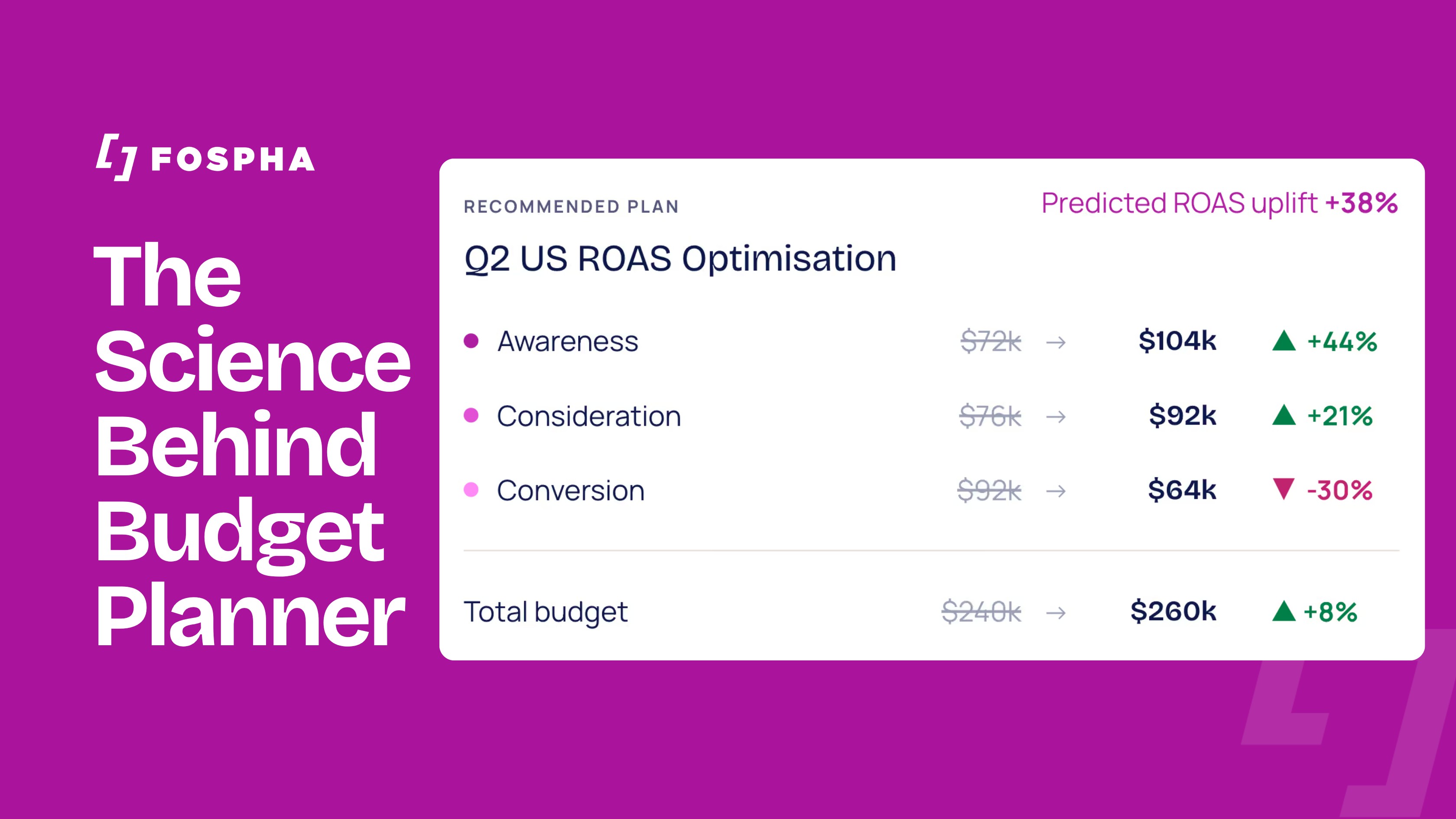
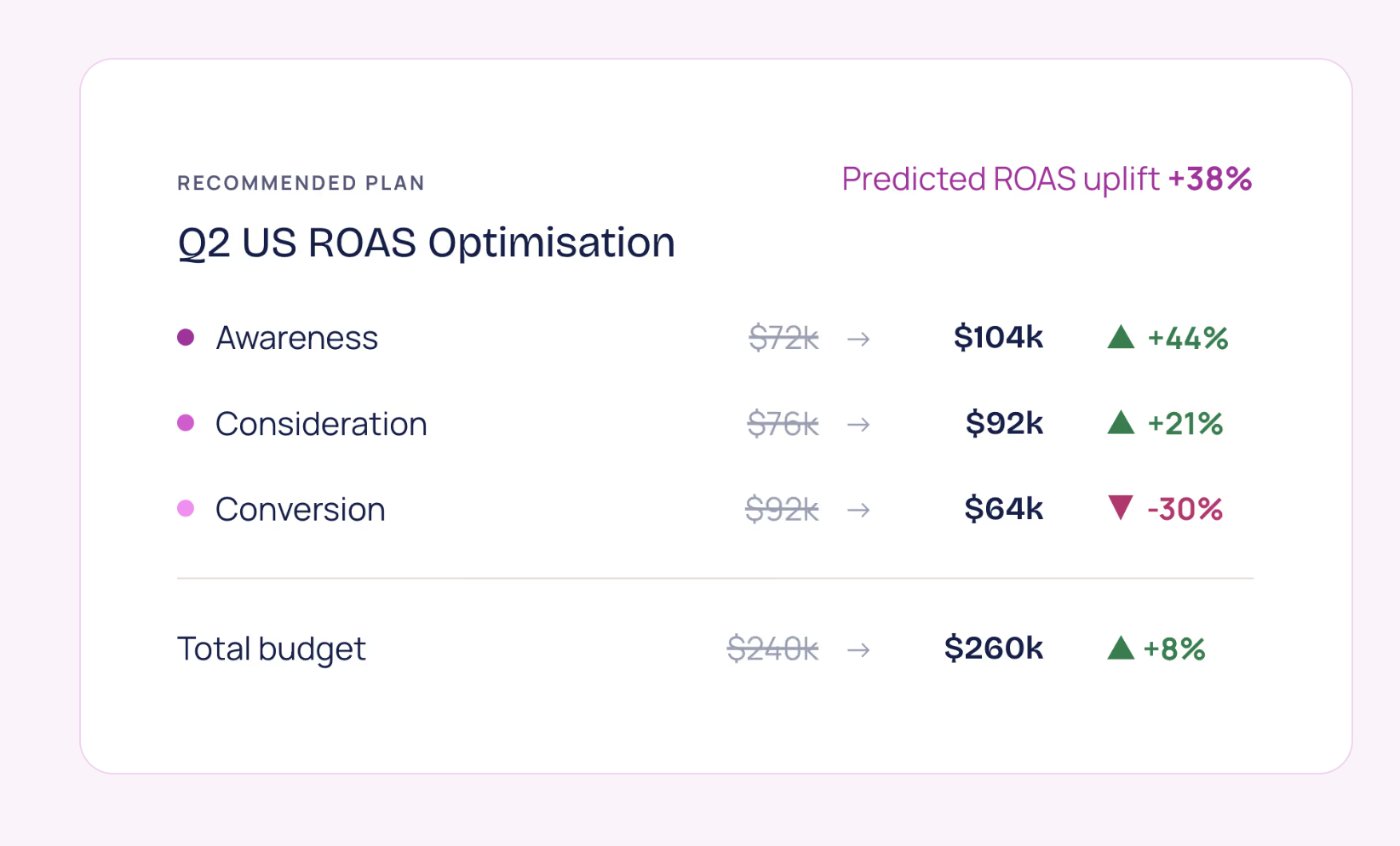
Budget Planner was built to answer that question directly. Instead of handing you a handful of scenarios and letting you guess which one holds up, it starts from 5,000 plausible forecasts of how your channels respond to spend, narrows to a representative 500, and runs a full budget optimisation on each one, then averages the most conservative 50 of those into one plan, chosen because it holds up under pressure rather than because it looks strongest on day one.
Three things are built into how it gets there.
- The first is a relative incrementality comparison across the whole mix, so a channel only gets more budget if it's earning it against every other channel, not just against its own past performance.
- The second caps how far any channel can move in a single cycle, 15% as a soft limit and 30% as a hard one, so nothing gets starved or flooded faster than it can realistically absorb.
- The third is funnel weighting, and it's the piece that answers the retargeting problem specifically. It stops the model from treating a warm conversion and a brand new one as interchangeable, so prospecting doesn't quietly lose ground just because retargeting looks better on paper this week.
Budget Planner is built to give you a plan you can hold through a full cycle, one that makes it easy for finance to approve your next 10% increase because it delivers.
Budget Planner is live in Beta inside Fospha. See how it builds your plan.

Stay ahead with the inside scoop from Fospha.
For over 10 years we've been leading the change in marketing measurement.