How to Prove Brand Spend is Working Before the Revenue Arrives
Glow by Fospha measures the causal impact of brand spend on leading indicators like branded search and engaged sessions, using the Brand Impact Ratio (BIR).
Your brand campaign ran for three months. You believed in it. You still do. But when the budget review came around, last-click reported the revenue against the final touchpoint, and you were left explaining why upper-funnel spend should survive another quarter without a number that finance could work with.
That moment - budget, belief, and no metric to show for it - is where a lot of brand investment stalls.
Brand is a long game. The budget cycle is not.
Brand does not work on the timelines that finance expects. A well-run awareness campaign starts building demand in Q1. That demand tends to show up as a purchase in Q3 or Q4, by which point last-click has credited a retargeting ad or a branded search click that happened to be the final step in a much longer journey.
Last-click attribution is useful for what it measures - demand capture at the bottom of the funnel. The gap it leaves open is everything that happened before: the weeks of awareness spend that made someone curious enough to search, visit, and eventually buy.
That gap consistently makes brand investment harder to defend. Performance marketing has trained budget holders to expect daily ROAS and revenue attributed to spend. Brand investment builds the demand that makes those conversions possible, but it operates over months, through channels that typically never appear in a last-click report. Standard reporting tools were not designed to see that contribution.
What brand does before it converts
Between awareness spend and revenue, there is a layer that most standard measurement leaves unmeasured. It is the layer where demand is being built.
Brand investment does not produce customers immediately. It produces interest. Someone sees your video ad, searches for your brand name a week later, visits your website without clicking anything, reads a product page and leaves. These are not failed conversions. They are leading indicators - early signals that a person is becoming aware of your brand, forming a preference, and moving toward a decision.
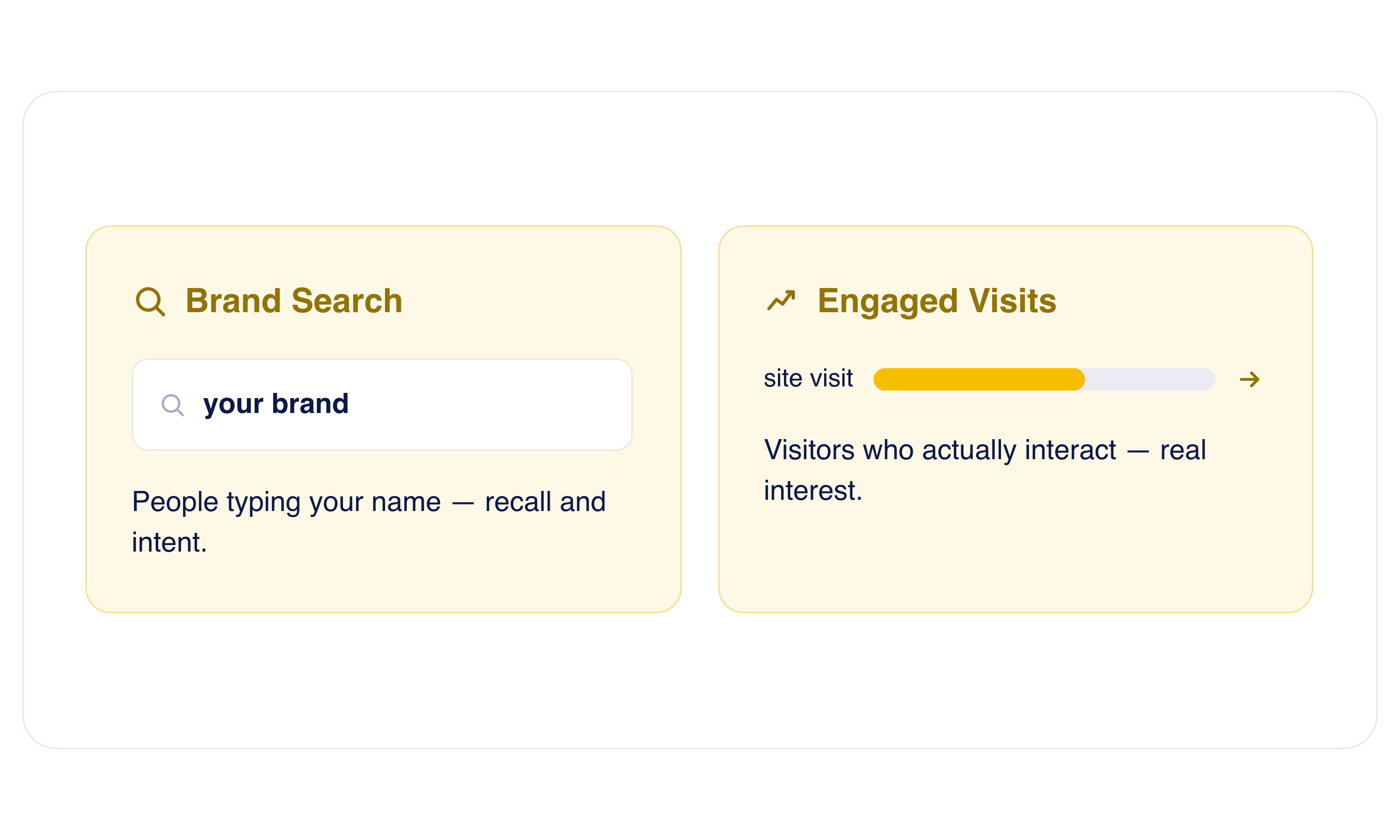
Branded search impressions. Engaged website visits. These signals tend to respond weeks before revenue data does. If you can measure them, you can see whether a campaign is landing long before it ends. And if you can connect those signals to the channels that drove them, you have something concrete to bring to a CFO.
The challenge of connecting spend to signal
Most teams know these signals exist. GA4 surfaces branded search clicks. Platform dashboards show reach and video views. These tools do their job well. What they were not built for is causal measurement - isolating the specific contribution of each channel to brand demand, independent of everything else happening at the same time.
Without that, the best a brand team can typically say is that branded search went up while a campaign was running - a reasonable inference, but not one that holds up under finance scrutiny. What tends to survive a budget conversation is a number that accounts for seasonality, competitor activity, and other campaigns running in parallel, and shows which spend drove which signal.
For most brand teams, that number has not been available in a form finance could act on. That is the gap Glow is designed to fill.
Glow: causal measurement for brand
Glow is Fospha's brand measurement solution, now in Open Beta. It ingests two years of data from GA4 and your ad platforms and models the causal contribution of each channel to two leading brand indicators: branded search impressions and engaged website sessions.
The model accounts for seasonality, other campaigns, and organic effects to estimate what each channel drove - rather than what it coincided with. Glow works from your own first-party data, not consumer panels or surveys. It runs continuously, producing weekly results rather than a point-in-time snapshot, so brand teams have a live read on campaign performance rather than waiting for a post-campaign report.
Glow sits alongside Fospha's Core measurement product, not in place of it. Core, captures the revenue brand spend drives — but brand activity also has a delayed impact, so on any given day the revenue signal alone can't tell you whether today's campaign is working. They answer different questions, and both questions matter.
The Brand Impact Ratio: one number for the finance conversation
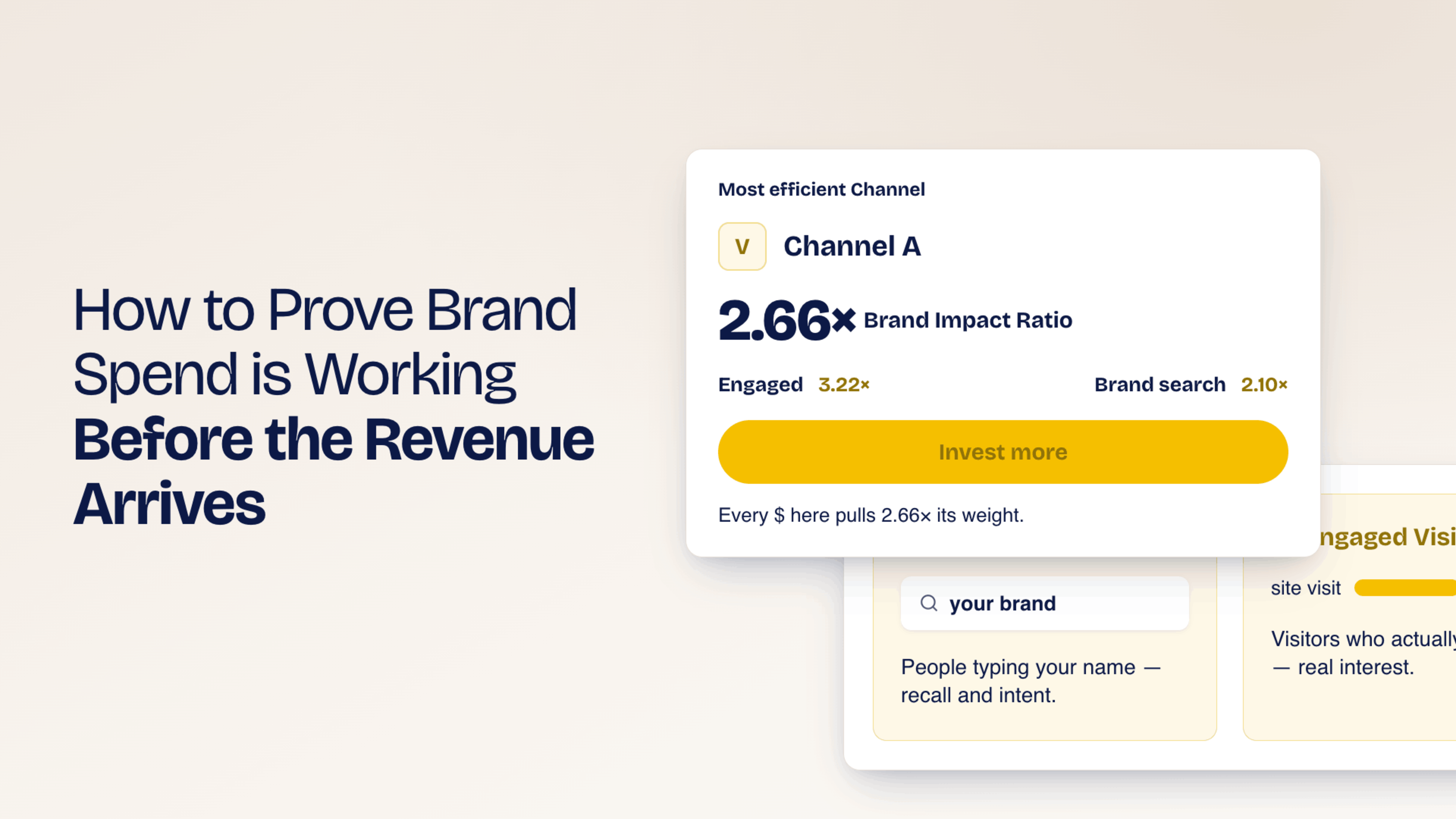
The metric Glow produces is the Brand Impact Ratio (BIR): how much brand signal each channel generates relative to its share of spend.
BIR = % Leading Indicator Attribution ÷ % Total Spend
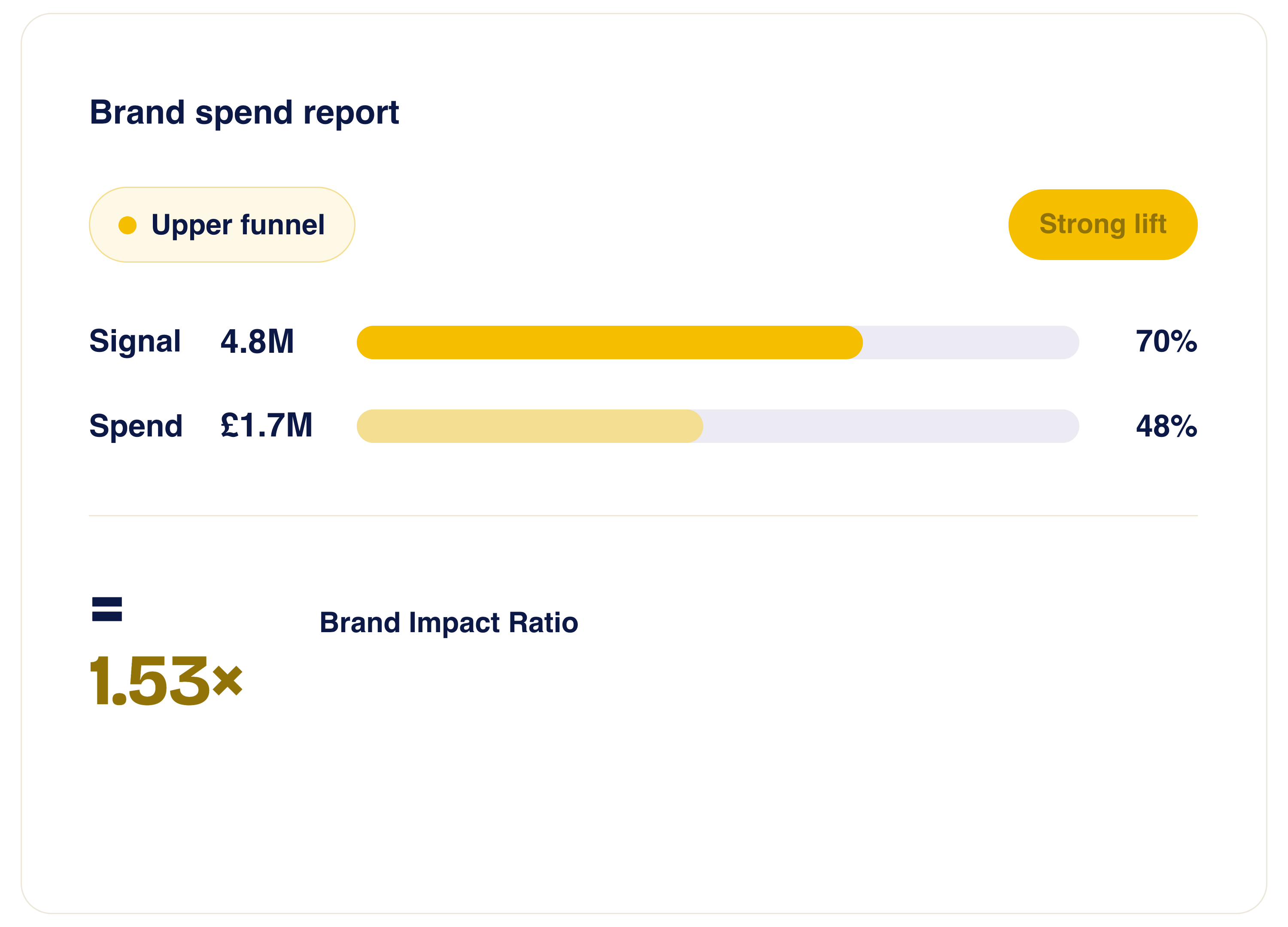
Above 1.0 means a channel is generating more brand demand than its share of spend would suggest. Below 1.0 means its brand contribution is lower relative to what it receives. It is a single efficiency metric - one you can put in a spreadsheet, a QBR, or a conversation with a CFO - that gives brand investment the same kind of measurable accountability that performance channels already have.
Benchmark data across 138 Glow customers, 50 markets, and 36 channel segments shows that awareness channels typically score above 1.5x. Conversion channels tend to score below 1.0 among brands in the dataset, even where they receive the majority of spend.
That gap is where Glow adds clarity, and where brand teams can make the case for investment that the numbers alone have not previously supported.
What this looks like in practice
Brands that invest consistently in upper-funnel channels can double their overall ROAS within 10 months, according to the Fospha Growth Accelerator Report. To reactivate channels that were cut because the revenue connection could not be demonstrated. To walk into a finance conversation with a metric that gives brand the same evidential standard as performance.
ROAS measures demand captured today. Brand Impact Ratio measures demand being built for tomorrow.
Brand builds the demand that performance captures. Both deserve measurement. If you have budget, believe in brand, and need a number - that is what Glow is built for.

Stay ahead with the inside scoop from Fospha.
For over 10 years we've been leading the change in marketing measurement.
.png)