
Fospha's June Product Debrief: Brand Impact Ratios, Sephora reporting, and more features to help you make the case for your next dollar
See what's new in Fospha this June: Brand Impact Ratio, Custom Categories reporting, expanded Ask Fospha AI, and Sephora sales tracking - all in one dashboard.
Every measurement tool eventually asks you to pick a lens: channel or category, brand or performance, one marketplace or another. The business doesn't work that way. Budget gets defended in one meeting, reported on in another, and built by people who structure it completely differently - and most platforms make you choose which version of the truth to show up with.
June was about removing that choice. We shipped five releases that each close a different version of the same gap: the distance between what you can see vs what you can act on. Here's what changed, and what it means for how you work.
Why does brand spend keep losing the budget argument?
Brand campaigns run on a lag. The audience you build today shows up as revenue months from now - and by the time it does, a bottom-funnel channel has already claimed the conversion. So brand spend gets treated as a cost center, not an investment, and it's usually first on the chopping block when budgets tighten. That's not a brand manager's failure to make the case. It's a measurement failure to arm them with the number to make it with.
Brand Impact Measurement, (now in Beta) is built to fix that. It quantifies the relationship between what you're spending on a channel and how much future demand that channel is building, using branded search impressions and engaged sessions as the leading signal.
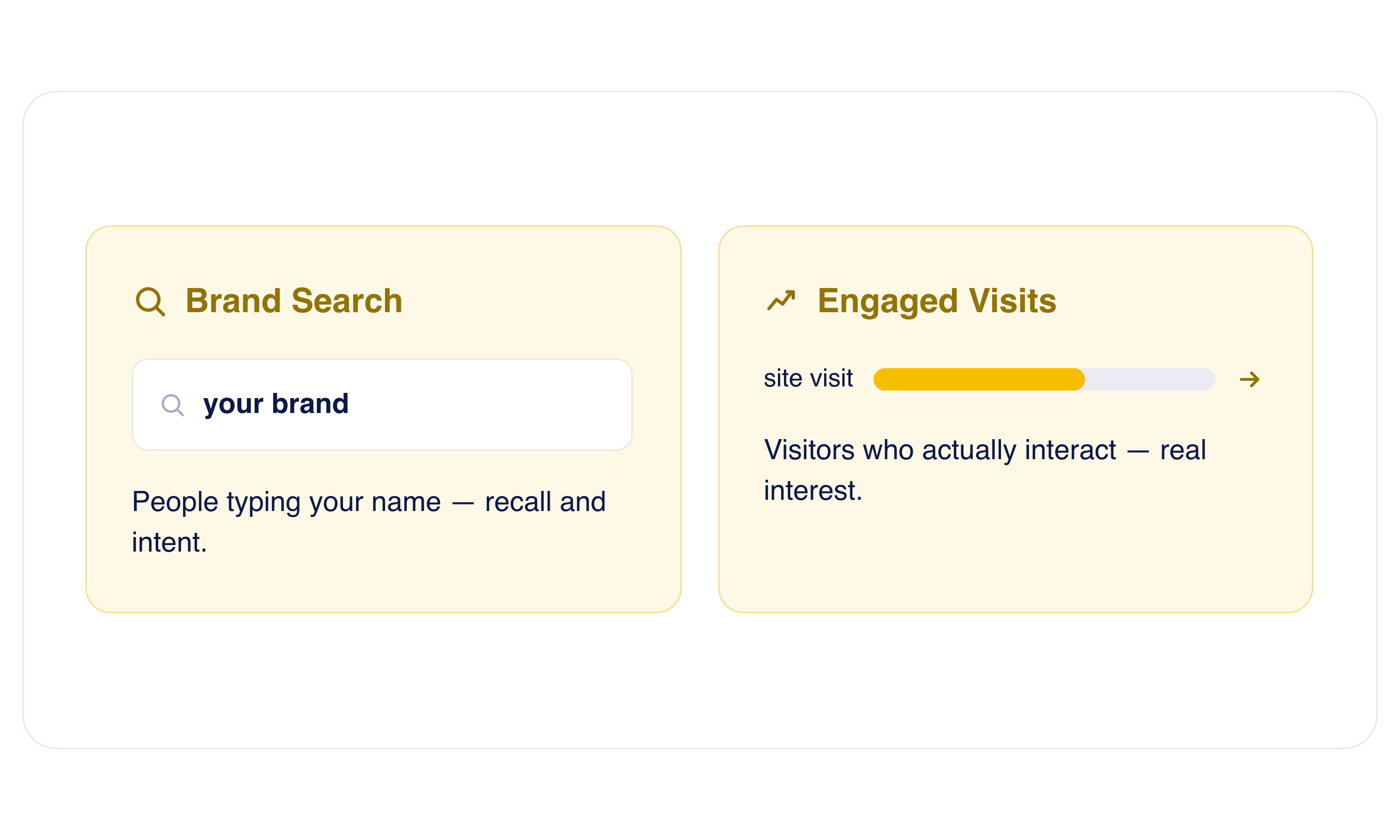
It then distills it into one number: the Brand Impact Ratio which shows how much brand demand each channel generates relative to what you spend there. Instead of asking finance to trust that brand spend "works," you bring a metric that shows what it's building, while the campaign is still live.
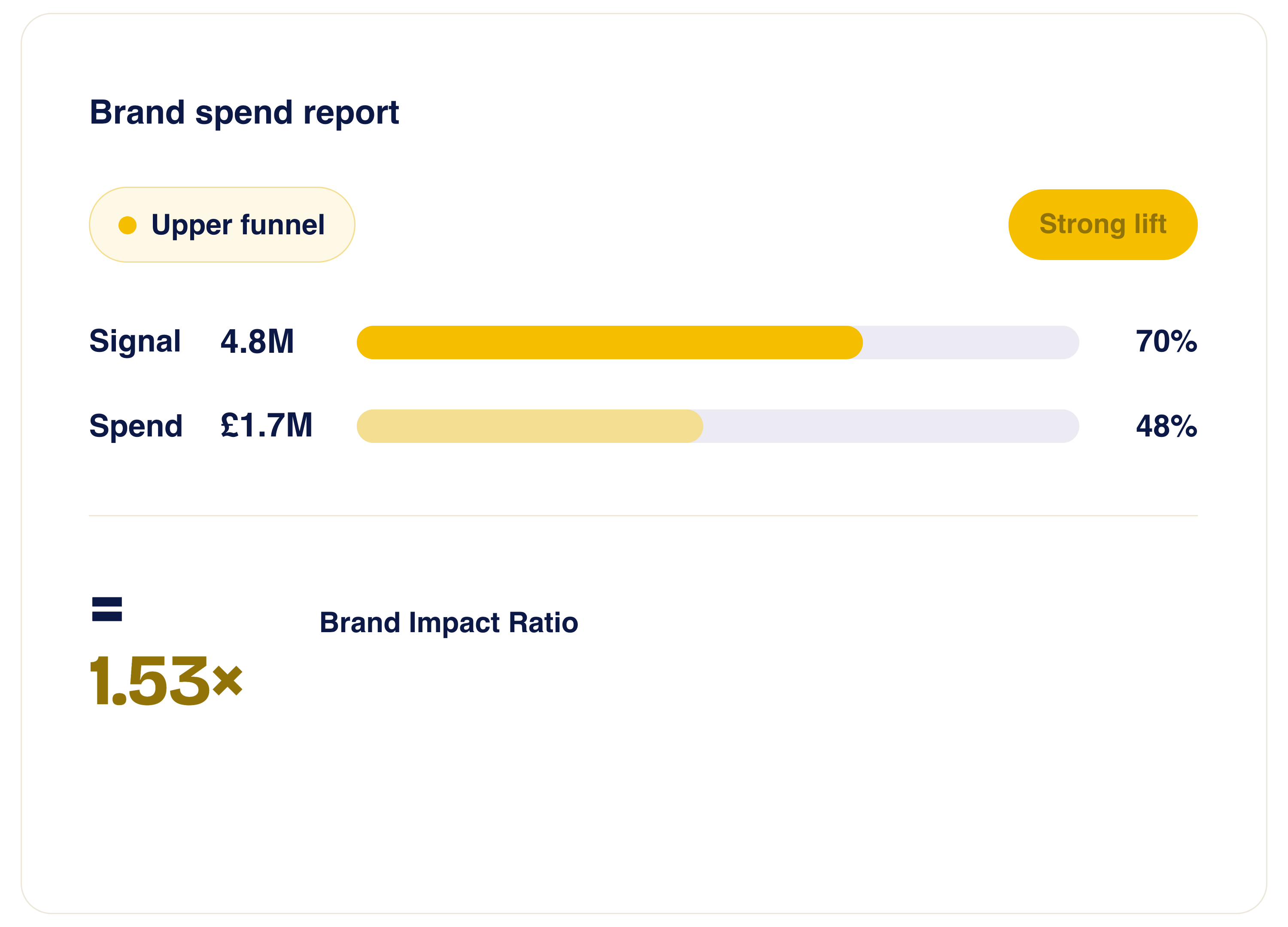
It's designed for brand managers, CMOs, and paid media leads at enterprise ecommerce brands already investing upper-funnel who want the data to defend or grow that spend.
👉 See your Brand Impact Ratio.
Why do most reports need rebuilding before they reach a stakeholder?
Marketing doesn't run by channel - it runs by business unit, product category, funnel stage, or region. But most measurement platforms only speak channel, so the business ends up built around the tool instead of the other way round. The result: someone manually restructuring the same data in a spreadsheet every week before it's fit to present internally.
Custom Categories flips that. You map your Fospha data to your own business structure - business unit, product category, funnel stage, or region - directly in the dashboard, so Fospha builds around your business, not the reverse. It sits as a grouping layer on top of the measurement you already trust; it doesn't touch the underlying model or attribution.
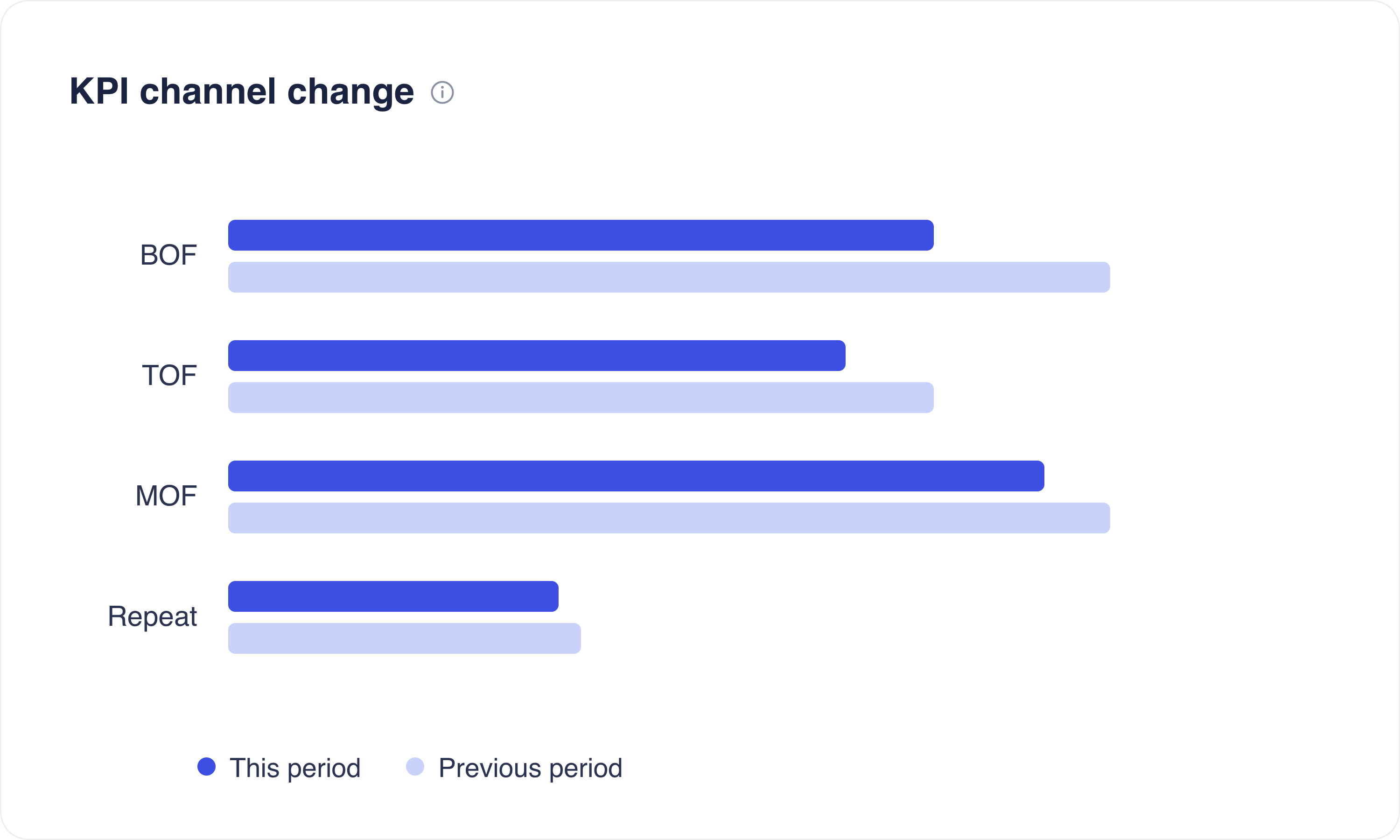
For performance and acquisition leads managing multiple categories, regions, or business units, that means the view in Fospha is finally the view you actually report against - without rebuilding it in a spreadsheet every week.
👉 Explore how it maps to your business structure.
Why do the answers always take longer than the question deserves?
Ask Fospha AI now covers more ground: competitive questions like where you're under-investing relative to other brands, plain-language explanations of what a given metric measures, and forecasts of incremental headroom - all pulled from your help centre content, benchmark data, and incremental forecasting, and shaped by the Custom Categories you've already built. If your day runs on being in the dashboard, this cuts the time between question and answer.
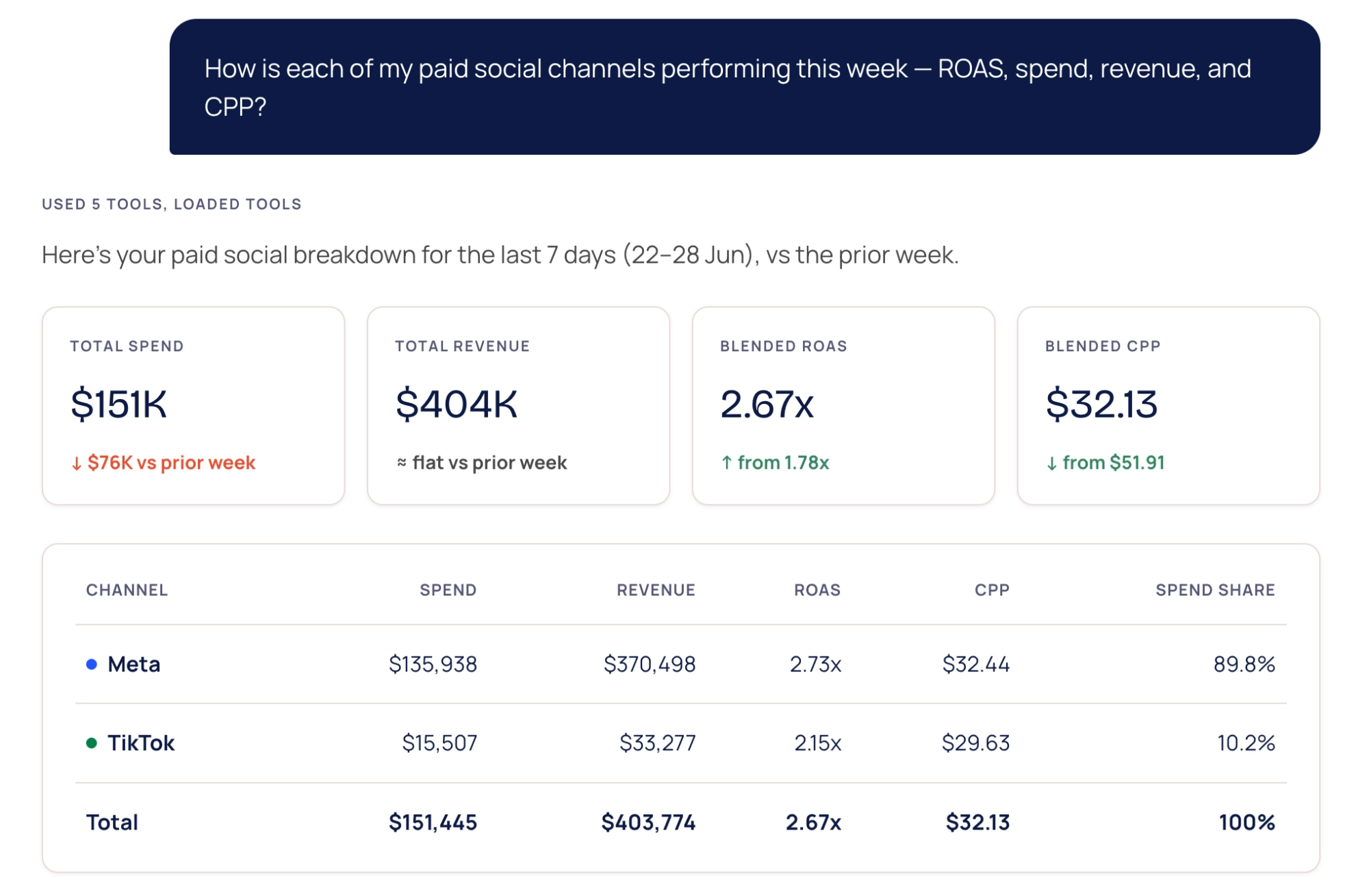
👉 Ask Fospha AI about your own data
Not every release this month is for every reader, but if you're a beauty brand selling through Sephora, this one is for you.
Why doesn't your Sephora performance live anywhere near the rest of your data?
Beauty brands selling through Sephora have had to check that channel separately from everything else. Not anymore: your US Sephora sales, online and in-store, now show up as a reporting view inside the Fospha dashboard alongside every other channel, currently in Beta.
👉 See what this unlocks for you.
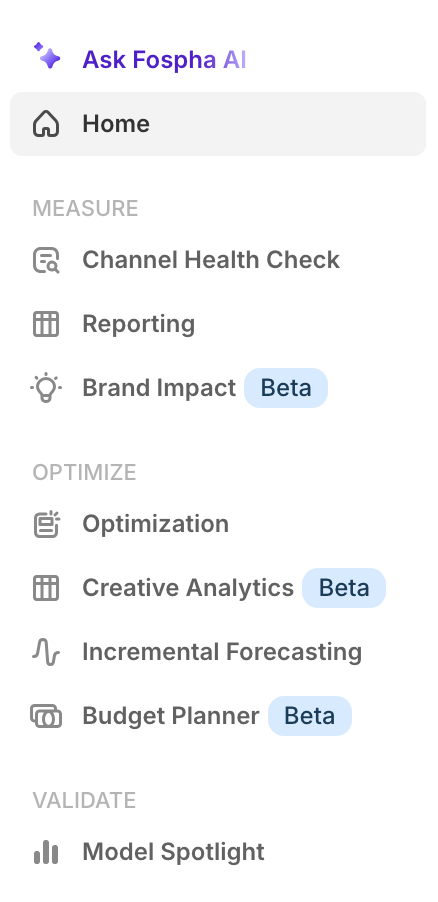
Measure, optmize, validate, act repeat
Even the dashboard's own navigation moved this quarter, now following the same measure, optimize, validate, act rhythm most performance teams already work in.
Put together, June changes three conversations.
1. Brand spend now has a number, not a defense.
2. Reporting can follow your business structure instead of forcing your business into the platform's.
3. And the questions you ask the dashboard get answered before the moment to act on them has passed.
That's June. Peaked your curiosity? Let’s talk.

Stay ahead with the inside scoop from Fospha.
For over 10 years we've been leading the change in marketing measurement.
.png)


Heading 1
Heading 2
Heading 3
Heading 4
Heading 5
Heading 6
Lorem ipsum dolor sit amet, consectetur adipiscing elit, sed do eiusmod tempor incididunt ut labore et dolore magna aliqua. Ut enim ad minim veniam, quis nostrud exercitation ullamco laboris nisi ut aliquip ex ea commodo consequat. Duis aute irure dolor in reprehenderit in voluptate velit esse cillum dolore eu fugiat nulla pariatur.
Block quote
Ordered list
- Item 1
- Item 2
- Item 3
Unordered list
- Item A
- Item B
- Item C
Bold text
Emphasis
Superscript
Subscript