
Driving Forward: Why Most Measurement Tools Keep You Looking in the Rearview Mirror
Most marketing measurement tools are backward-looking. They report what happened — last month’s ROAS, yesterday’s conversions, historical channel performance — but they don’t tell you what to do next. Modern teams need prescriptive, forward-facing measurement that recommends budget shifts, guides optimization at the right level of granularity, and enables automation at scale.
.png)
Imagine trying to drive to an unfamiliar destination using only your rearview mirror. You can see every turn you've made, every mile you've covered, and where you've been with perfect clarity. But the road ahead? Complete mystery. You'd have to guess where to turn next, hope for the best, and only know if you were right after you'd already gone the wrong way.
This is exactly how most businesses operate with their measurement tools today.
Traditional measurement platforms excel at telling you what happened. They'll show you last quarter's ROAS, yesterday's conversion rates, and which campaigns drove revenue last month. They're descriptive, backward-looking, and ultimately leave you with one frustrating question: "So what do I do about it?"
At Fospha, we believe this isn't good enough. We're on a mission to transform measurement from a rear-view mirror into a GPS - operational, prescriptive, and forward-facing, without sacrificing the scientific rigor that makes insights trustworthy.
Why do most measurement tools create information without action?
The fundamental flaw in most measurement tools is that they present information in isolation, without a clear path to action. You see data, identify patterns, maybe spot some correlations - but then you're on your own to figure out what to do next. It's descriptive analytics at its core: telling you what happened, but not what should happen.
Think about the typical workflow:
- Review last month's performance dashboard
- Notice Google Ads ROAS dropped 15%
- See Meta spend increased but efficiency declined
- Observe TikTok showing promising early signals
Now what?
The measurement tool has done its job by presenting the facts. But the really valuable questions - where should we reallocate budget? How much? When? At what level of granularity? - those are left to manual analysis, gut instinct, or lengthy consulting engagements.
This creates what we call the "actionability gap." The distance between having data and knowing what to do with it. For most businesses, this gap is where value goes to die.
But here's what makes this problem truly acute: modern marketing teams are drowning in complexity while simultaneously facing brutal budget constraints. There's a massive delta between the size of the jobs to do in marketing and the appetite that businesses have to invest in marketers.
The explosion in channels, markets, campaign types, and AI-driven creative variety means teams can't keep up. We're seeing retail brands reduce marketing team sizes while growth expectations remain unchanged or increase.
Most measurement actually compounds this capacity problem. Traditional measurement systems create more work, not less. Each new report means more analysis required, more meetings to discuss findings, more time spent trying to figure out what it all means. Measurement becomes a cost center rather than a profit driver.
What teams desperately need is decision velocity - the ability to take action quickly at the scale required. Because of this complexity, humans simply can't do that anymore. You cannot afford, in today's climate, to have the humans that would enable you to take decisions quickly at the scale you need to. And actually, more humans would never work anyway - because more humans equals more complexity, equals more difficult decisions.
Where defensible value really lies
While others can replicate dashboards and attribution models, Fospha's truly defensible moat isn't in showing you the past - it's in the delivery of prescriptive actions with a demonstrable record of success that clients trust.
This requires three critical elements:
1. Prescriptive recommendations: Tell clients exactly what to do
2. Proof of success: Back recommendations with evidence they'll work
3. Closed-loop accountability: Reflect back on actions taken and show they worked
When we talk about making measurement operational, we mean building this complete cycle into the product itself. Not as a service add-on, not through manual analysis, but as the fundamental way the platform works.
Why does granularity determine whether measurement is actionable?
Here's a key insight we've learned: to be prescriptive and directly actionable, you must be appropriately granular for the type of action clients are taking.
Think about navigation directions again. If someone asks how to get to a city 200 miles away and you only have one instruction to give, you'd probably just point in the general direction. If you have five instructions, you'd give them the route number and major turns. But if you can give 100 instructions, you'd provide detailed, turn-by-turn guidance.
The same principle applies to marketing actions. The level of specificity should match the frequency and nature of the decision:

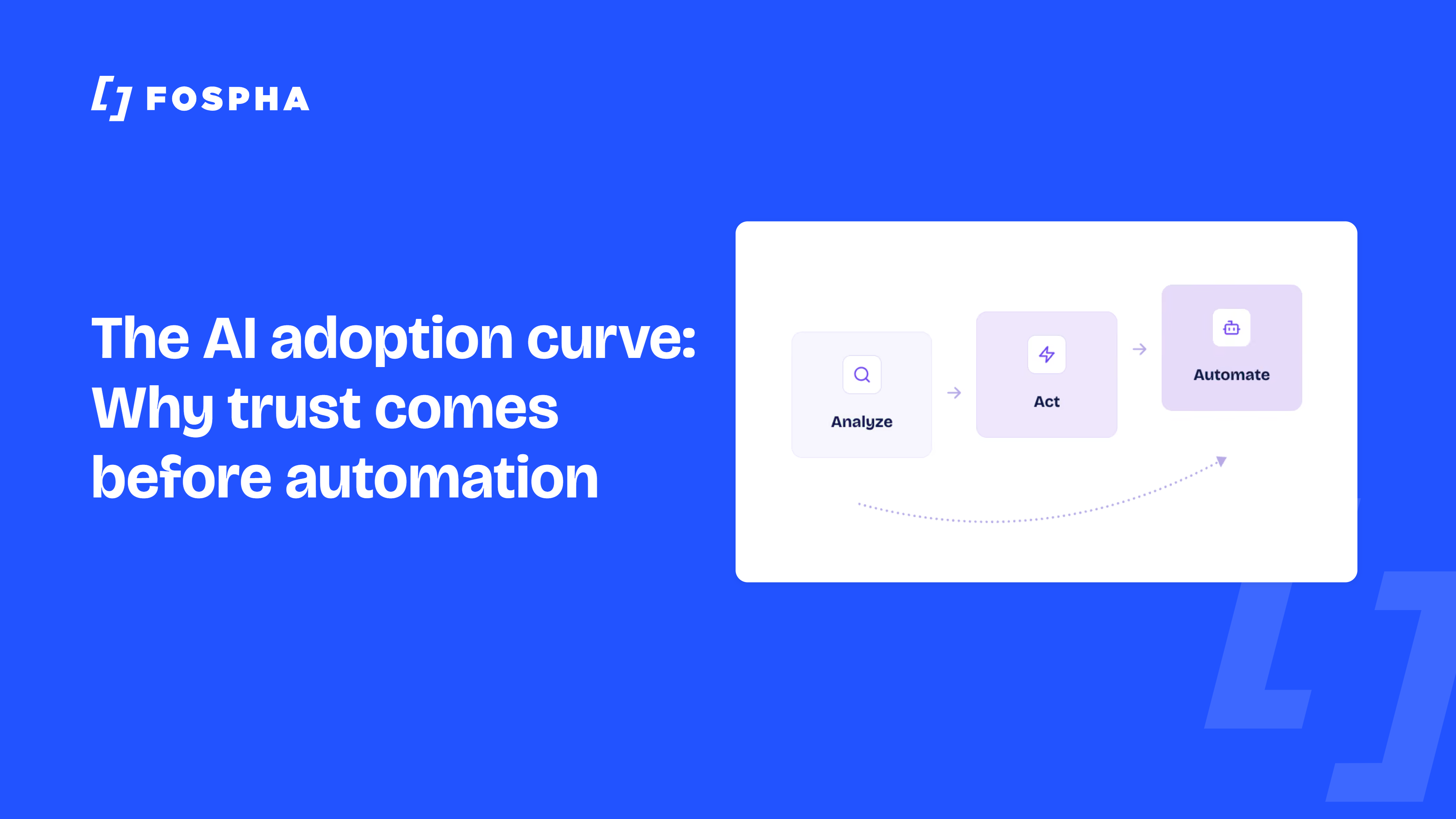
Planning, pacing, optimization, and automation
We've organized the end-to-end paid marketing cycle into four distinct phases, each with increasing granularity as frequency increases:
Planning: where should we invest?
Frequency: Annually, Quarterly, Monthly
Planning answers strategic questions about channel allocation, new market entry, seasonal adjustments, and budget distribution. It's informed by business objectives, market conditions, and expected returns. This is broad-brush direction that sets the strategic framework - deciding which roads to take on your journey.
Pacing: are we on track?
Frequency: Monthly, Fortnightly, Weekly
Pacing tracks spend and performance against plan throughout an active period. It answers whether you're ahead or behind target, if interventions are needed, and whether multiple cascading plans align. This is about monitoring progress and knowing when course corrections are required - checking if you're making good time or need to adjust your route.
Optimization: what should we change now?
Frequency: Weekly, Daily
Optimization identifies specific changes at campaign and ad level to improve efficiency and effectiveness within current budget allocation. These are the tactical adjustments that keep performance trending in the right direction or correct when things drift off course - the daily driving decisions about which lane to use, when to accelerate, when to ease off.
Automation: how can we act on it?
Frequency: Daily, Real-time
This is where measurement becomes truly transformational - like activating self-driving mode. Automation executes optimizations at operational cadence without manual intervention, enabling continuous improvement at the most granular level. The system makes hundreds of small adjustments constantly, responding to conditions faster than any human could, while you focus on the strategic destination rather than every turn of the wheel.
Setting the groundwork now
We're not claiming to have solved this completely. What we're doing is fundamentally rethinking how measurement tools should work, and systematically building toward that vision.
Right now, we're actively developing capabilities across all four phases:
Planning innovations: Enhanced budget planning tools that don't just show you historical allocation but simulate outcomes based on different investment scenarios. We're testing AI-powered spend simulation that lets you adjust channel budgets with sliders and see real-time impact on forecasted impressions and conversions.
Pacing enhancements: Building budget pacing functionality that automatically tracks performance against plan, highlights where you're off-track, and quantifies the intervention needed to get back on course.
Optimization advancement: Expanding Fospha Spark to provide more granular, campaign-specific recommendations. Developing performance summary agents that can analyze patterns and prescribe specific tactical changes.
Automation foundation: Piloting daily budget optimization with select clients. Testing Pinterest data pass-back for automated optimization. Building the infrastructure for prescription execution, not just prescription generation.
Why this matters
The difference between descriptive and prescriptive analytics isn't just academic - it's the difference between tools that inform and tools that drive results.
When measurement is purely descriptive, the value depends entirely on the skill of the analyst interpreting it. A talented marketer can extract insights and make good decisions. A less experienced one struggles.
When measurement is prescriptive, the tool itself encodes expertise. It doesn't just present patterns - it recognizes them, compares them to thousands of similar situations, and recommends the optimal response. This democratizes access to sophisticated marketing intelligence.
And when measurement is operational, when it can not only recommend but execute, it closes the loop entirely. The insights become actions, the actions generate results, and the results feed back into better insights. This is where AI and automation truly shine, handling the volume and velocity that humans simply can't match.
This shift is essential because measurement should be seen as a profit driver, not a cost center. The traditional view of measurement as expensive overhead that you "need to do" is exactly backwards. The organizations that win will be those that deploy automation and AI to survive and scale sustainably without proportional headcount growth.
Your own data only contains some of the answers, you need to learn from others too. Breaking out of the silo of internal-only measurement and leveraging collective market intelligence is how you move from guessing to knowing, from hoping you're competitive to having the social proof and evidence-based decision-making that lets you confidently persuade executives and CFOs.
The road ahead
We believe the future of measurement isn't just more dashboards or more models. It's about transforming measurement into an operational system that helps businesses know where they're going, not just where they've been.
We're building that GPS for paid marketing. One that:
- Tells you not just what happened, but what you should do about it
- Provides recommendations appropriate to the decision you're making
- Backs those recommendations with proof they work
- Can eventually execute them automatically when you're ready
The groundwork is being laid now across planning, pacing, optimization, and automation. Each phase builds on the last. Each capability makes the next one more powerful.
Because in a world where everyone has access to the same data, competitive advantage comes from knowing what to do with it faster and better than everyone else.
That's the journey we're on. Not just building better measurement, but operational measurement that drives action without sacrificing science.
Ready to stop driving by looking in the rearview mirror?
FAQ
What is prescriptive marketing measurement?
Prescriptive marketing measurement recommends specific actions based on expected incremental impact, rather than simply reporting historical performance.
How is prescriptive measurement different from attribution?
Attribution assigns credit to past touchpoints. Prescriptive measurement uses performance signals to guide future budget and optimization decisions.
Why is backward-looking measurement no longer enough?
Because media environments change daily. Waiting for retrospective reports slows decision-making and limits growth.
What makes measurement operational?
Operational measurement connects insight to execution - measuring performance, recommending changes, enabling action, and validating results in a continuous loop.

Stay ahead with the inside scoop from Fospha.
For over 10 years we've been leading the change in marketing measurement.
.png)


Heading 1
Heading 2
Heading 3
Heading 4
Heading 5
Heading 6
Lorem ipsum dolor sit amet, consectetur adipiscing elit, sed do eiusmod tempor incididunt ut labore et dolore magna aliqua. Ut enim ad minim veniam, quis nostrud exercitation ullamco laboris nisi ut aliquip ex ea commodo consequat. Duis aute irure dolor in reprehenderit in voluptate velit esse cillum dolore eu fugiat nulla pariatur.
Block quote
Ordered list
- Item 1
- Item 2
- Item 3
Unordered list
- Item A
- Item B
- Item C
Bold text
Emphasis
Superscript
Subscript